
Get Directions
Minister Road, SecunderabadCall For Appoitnment
+91 73309 90044
Get Directions
Minister Road, SecunderabadCall For Appoitnment
+91 73309 90044
The pancreas is a vital abdominal organ responsible for production of digestive juices and hormones for the control of blood sugar. A tumour which arises in this organ is very dangerous and is most of the time cancerous.
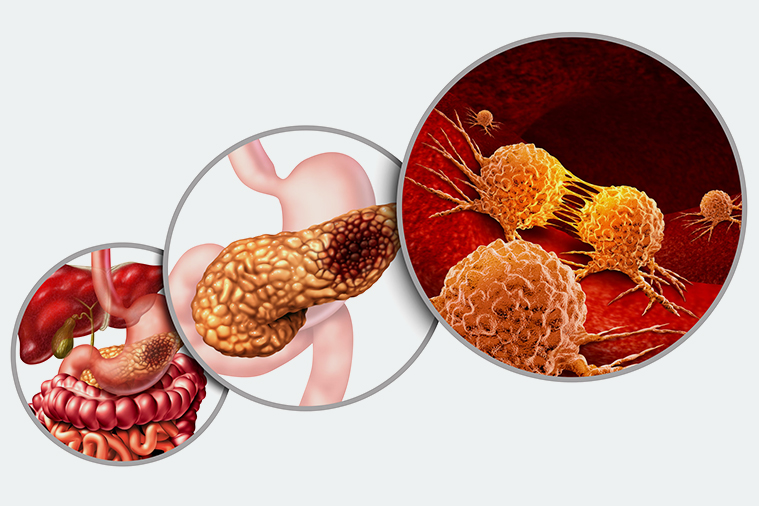
Cancer is a special type of disease characterized by abnormal cells that don't follow the normal checks and balances system prevailing in the body to control the growth of the new cells in the body. These abnormal cells once formed continue multiplying and cause interference with the normal functioning of the gland.
When cancer cells of the tumor grow and invade other organs destroying healthy tissues, it is said that metastasis has begun resulting a serious stage that is difficult to treat. Depending on the area where the cancer cells affect either exocrine or endocrine, classification of pancreatic cancer is made as under:
Pancreatic cancer forms when abnormal cells in your pancreas develop mutations in their DNA. These mutation result cells to spread uncontrollably and to continue invading normal cells would die.
Accumulation of these cells can form a tumor which spreads to other organs and blood vessels.
Symptoms of pancreatic cancer very often do not manifest until it reaches the advanced stage. That is why pancreatic cancer is called “silent” disease. However, when cancer develops, symptoms may include the following:
Cancer treatment depends on the stage of cancer, health status, age and also on the diagnosis. If cancer is not metastasized, surgery is best option to cure. If cancer is detected at the early stage, a patient can be cured completely in many instances. Different type of surgery such as Whipple procedure, distal pancreatectomy, total pancreatectomy are used to treat cancers in various parts of the pancreas. Chemotherapy and radiotherapy are useful as additional therapies after surgery to prevent recurrence of tumour.
If you’re looking for a specialist, Dr. Parthasarathy is a well-known gastrosurgeon in Hyderabad with strong experience in pancreatic cancer care. He manages everything from diagnosis to advanced surgeries like the Whipple procedure, covering both exocrine and neuroendocrine tumors.
Choosing the right doctor means looking at their expertise in pancreatic surgeries and their experience with conditions like adenocarcinoma or islet cell tumors. It also helps to check if they have access to proper staging diagnostics. In Hyderabad, you can verify their credentials through hospital affiliations and patient outcomes to make a confident decision.
Pancreatic cancer usually begins due to DNA mutations in the cells of the pancreas, which leads to uncontrolled growth and tumor formation. Over time, these cancer cells can spread (metastasize) to nearby organs or even distant parts of the body by invading healthy tissues.
Early symptoms can be subtle but may include upper abdominal pain, jaundice (yellowing of the skin or dark urine), unexplained weight loss and even new-onset diabetes. Since symptoms often appear late, it’s important to consult a gastroenterologist as soon as you notice anything unusual.
Surgery is usually most effective in early-stage pancreatic cancer when the disease hasn’t spread. Procedures like distal pancreatectomy are commonly used and they’re often combined with chemotherapy to improve outcomes before the cancer progresses.

Your health deserves the best. Choose Dr Parthasarathy for the best GI care.