
Get Directions
Minister Road, SecunderabadCall For Appoitnment
+91 73309 90044
Get Directions
Minister Road, SecunderabadCall For Appoitnment
+91 73309 90044
Diverticulitis are small pouches extending out from the walls of large intestine. Which then get infected or inflamed causes a condition called diverticulitis.
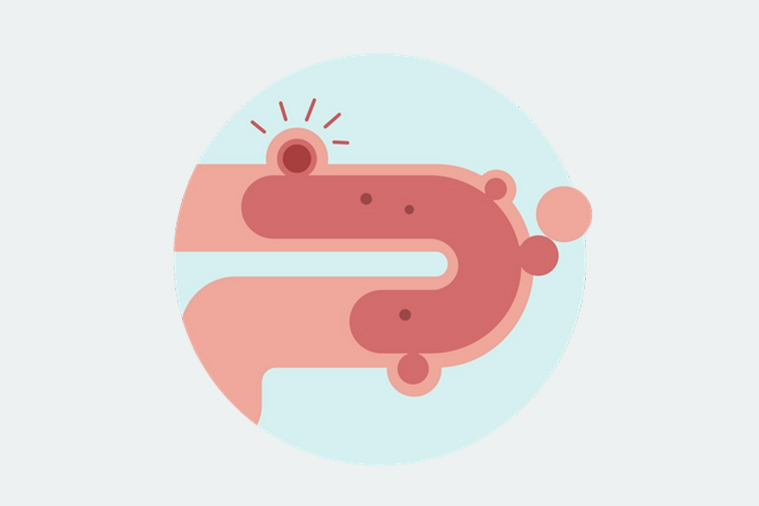
There are two main reasons that can cause Diverticulitis. One they can be present naturally, which is called congenital diverticula and the second due to repeated straining while passing motion or regular constipation the diverticulitis develop in the large intestine.
Majority of diverticulitis do not cause any symptoms. They are usually detected during the course of a routine colonoscopy or during a scan done for a different purpose. If they develop any complication, then the patient will start experiencing symptoms. Complications can arise when they get infected if the diverticula get blocked, secretions can accumulate inside and the diverticula can get infected and swollen and this can cause severe pain and fever.
Rarely the infection can be severe the diverticula burst, exactly what happens to an appendix and this can cause pus collection and life threatening infections. Diverticula can sometimes develop bleeding and the patient can have blood in the motion because of the diverticula. Severe cases of diverticula infection can cause fistula formation if an abnormal connection can develop between the large intestine and a nearby organ like the urinary bladder or the small intestine or uterus and this is called a colovesical fistula or coloenteric fistula. These patients present with repeated attacks of pain, fever and infection.
All divertuli do not need treatment. If the diverticulitis has been found Incidentally or by chance during a colonoscopy and the patient does not have any symptoms, these people do not need any treatment. If the diverticula develop a complication like repeated infections or bleeding or fistula formation then they need treatment.
In cases where the treatment is needed. Surgically the part of the large intestine which has developed diverticula is cut and removed and the remaining intestine is joined back.
Yes, by adhering to good dietary habits, by avoiding constipation, by increasing the bulk of the stool and by increasing food intake. The pressure experienced by the large intestine during motions is decreased and thereby the diverticula can be prevented or they can be slowed down from progressing.
Diverticulitis occurs when small pouches (called diverticula) that form in the walls of the large intestine become inflamed or infected. These pouches may develop naturally or due to long-term pressure in the intestine, often from constipation or straining.
Diverticula can be present from birth (congenital), but they more commonly develop over time due to chronic constipation and repeated straining during bowel movements. This pressure causes weak spots in the intestinal wall to bulge outward, forming small pouches.
Many people with diverticula don’t have symptoms. However, when inflammation or infection occurs, it can cause severe abdominal pain (usually on the lower left side), fever and digestive discomfort. In rare cases, complications like rupture, pus formation, bleeding or fistulas (abnormal connections to nearby organs) can occur.
Mild cases may improve with medications, rest and dietary changes. However, more serious or complicated cases such as those involving infection, bleeding or fistulas may require surgery. This usually involves removing the affected part of the large intestine and reconnecting the healthy sections.
Dr. Parthasarathy is experienced in treating complicated diverticulitis. Management may include medications for mild cases or surgery for severe conditions like infections, abscesses or fistulas. Preventive care, including a high-fiber diet and avoiding constipation, is also important.

Your health deserves the best. Choose Dr Parthasarathy for the best GI care.